

When Environmental Design Moves Beyond the Object
More Than a Green Claim
Environmental language has become easy to repeat. Materials can be described as responsible, packaging can be reduced, and a product can still remain unchanged in every other respect. The more demanding question is whether an ecological idea actually enters the object itself—its material choices, its use, its visual language, and the habits it asks to remain part of.
That difference often separates environmental messaging from environmental design. One belongs to branding. The other begins to alter how an object is made, how it is used, and what kind of relationship it proposes between daily life and the world beyond it.
Two Design Paths
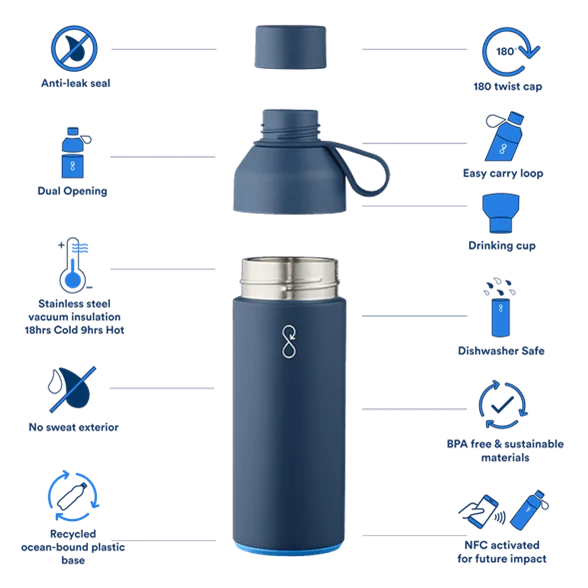
One established path is to make ecology legible through structure. Ocean Bottle remains a useful example because its environmental position is not treated as atmosphere alone. It is tied to a product system: each bottle funds the collection of the equivalent of 1,000 ocean-bound plastic bottles in weight, and that claim is connected to collection partners, refill tracking, and a broader language of repeat use and measurable impact. In the brand’s recent Peak range, ecology is expressed through modular lid options, recycled stainless steel, built-in NFC, and long-day functionality. The idea is made credible by being built into the object’s performance.
Another path is quieter. It does not begin by turning sustainability into a visible system of metrics, technical claims, or highly engineered proof. Instead, it allows ecological values to move through color, material restraint, repeated use, and emotional orientation. In that model, design is not asked to dramatize impact at every moment. It is asked to keep a certain relationship alive.
A Marine Vocabulary
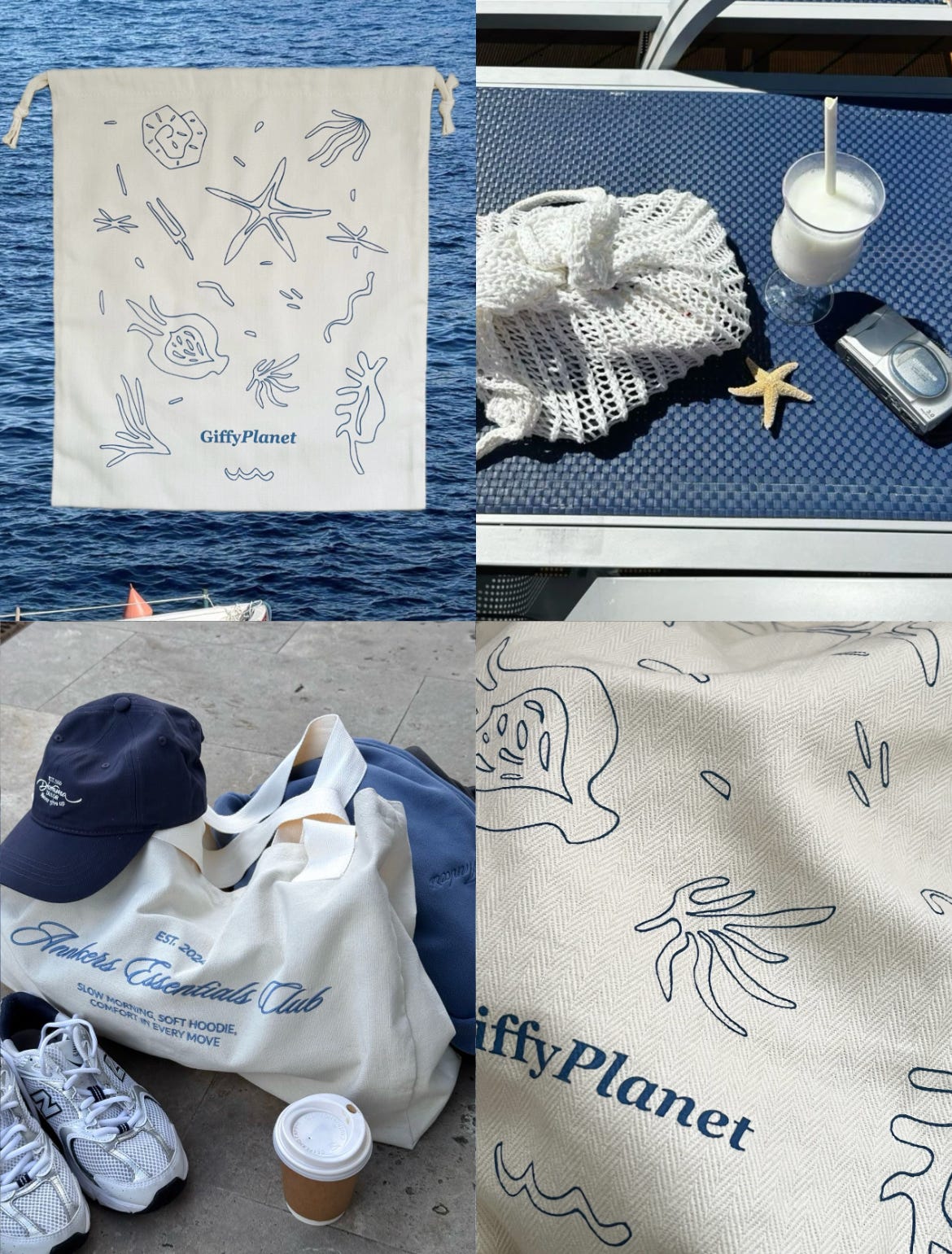
GiffyPlanet becomes interesting within this second direction. Its products do not present the ocean as a distant theme or as a single decorative motif. Instead, the sea is translated into a recurring vocabulary of colors, phrases, textures, and use situations: mist blue, navy, oat, turquoise, beach stripes, shell and coral line drawings, and phrases such as “Let the Ocean Hold You,” “Better Waves Ahead,” and “Vitamin Sea.” These do not function as activist slogans. They operate more like small emotional carriers, keeping marine presence near the body and within everyday routine.
That consistency matters. Many sustainability-led brands remain visually generic, as if ecological seriousness has to arrive through neutral colors and the removal of imagery. GiffyPlanet takes another route. It lets the marine reference stay visible on the surface of the object. The result is not a purified eco aesthetic, but a softer one—coastal, lightly graphic, and intentionally approachable.
Materials in Daily Use
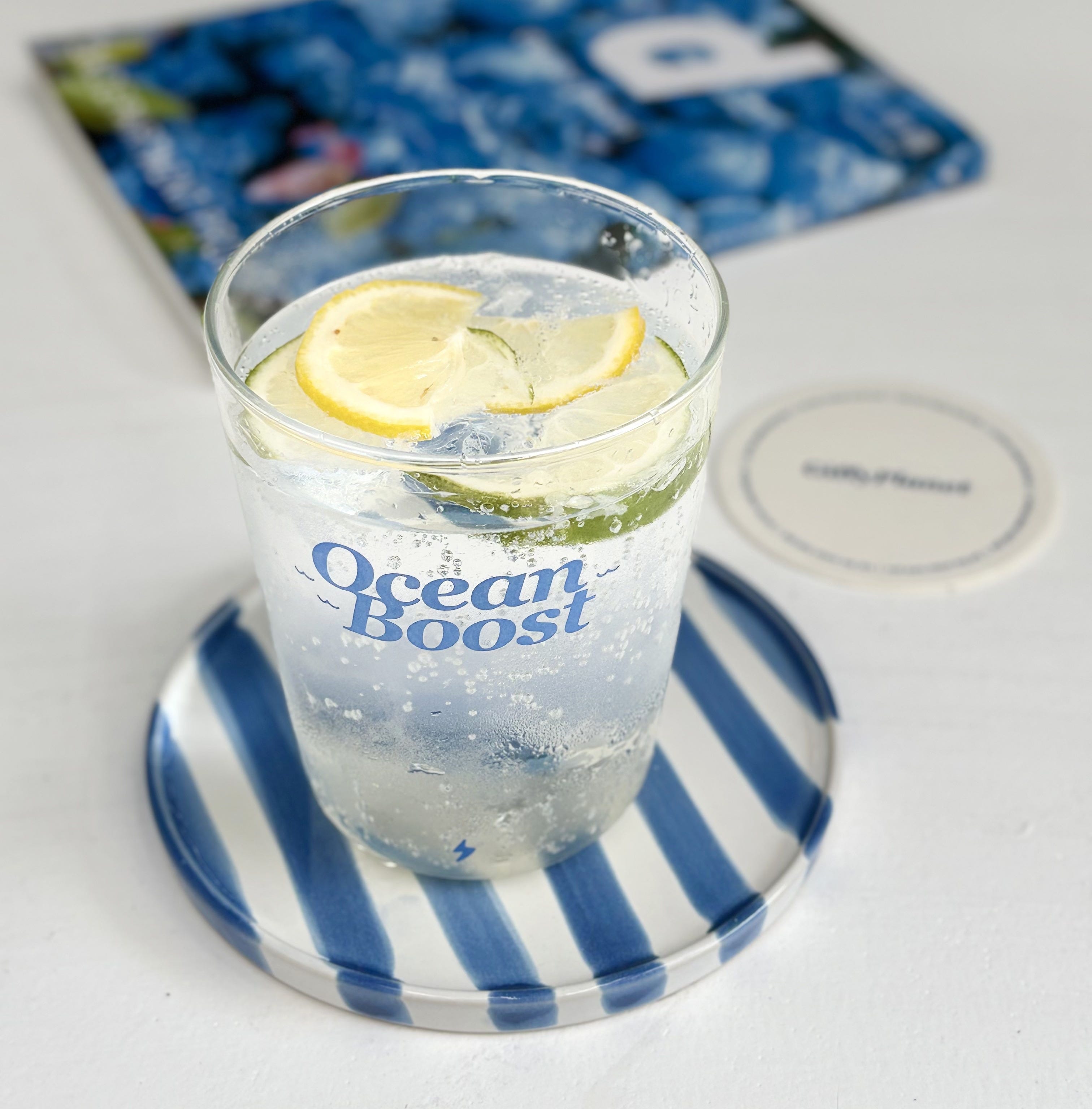
The material dimension is modest but not absent. The Ocean Boost Glass Cup is hand-blown and made from high-borosilicate glass, paired with an eco-friendly cotton-paper coaster. The drawstring bag uses natural herringbone cotton linen. The beach towel foregrounds quick-dry performance. None of these claims try to turn the brand into a laboratory of advanced material innovation. What they do instead is align material choice with ordinary use, so that sustainability is felt through handling, carrying, drinking, packing, drying, and reuse.
That alignment is easy to overlook, but it is where a design position often becomes believable. Ecological language tends to stay abstract when it appears only at the level of mission. It becomes more persuasive when it reaches the scale of repeated contact—when a product begins to change not only what is bought, but also how daily use is framed and remembered.
Beyond the Product
The brand becomes more specific once it moves past the object itself. On its product pages, GiffyPlanet describes its position through human-marine symbiosis, coral reef conservation, support for marine scientific research and ocean protection, and a commitment to making women in marine science and diving more visible. That already places the products inside a wider field of concern rather than leaving them as isolated lifestyle goods.
Its official social media pushes that structure further. Alongside “Let the ocean hold you,” the profile also points to marine exploration travel through GPVoyage and to a water-oriented community through Island. That extension matters because it suggests that the marine idea is not meant to end at purchase. It is being organized across products, travel, community, and forms of participation.
A Softer Ecology
Set beside Ocean Bottle, the difference becomes clearer. One brand makes ecological responsibility legible through explicit systems: quantified collection, modular product logic, recycled material percentages, and designed-for-movement durability. The other works more slowly. It folds marine attention into visual atmosphere, domestic ritual, and a broader invitation to stay emotionally and socially connected to the sea.
Neither path cancels the other. They simply show that environmental design does not have only one valid form. It can appear as an engineered system of measurable intervention. It can also appear as a quieter cultural practice that reshapes attention, routine, and participation over time.
What Moves Beyond the Object
What deserves attention here is not whether every product can carry the full weight of ecological action. Very few can. The more revealing point is that environmental design becomes more substantial once it is no longer asked to reside in the object alone. It begins in materials and use, but it gains force when it extends into relationships, communities, and ways of staying in contact with the world that first gave the object its meaning.
In that sense, the most interesting environmental objects are rarely only objects. They are points of entry into a larger practice: not just things that signify care, but things that help organize it.