
A New Approach to Home Fragrance: Less Scent, More Presence
Home fragrance is often treated as the final layer in a room: the thing you add once everything else is already in place. But the spaces people remember are rarely the ones that smell the strongest. More often, they are the ones where scent feels inseparable from mood, material, and use.
That is the difference between fragrance as decoration and fragrance as presence.
A lot of fragrance products are still framed as quick atmosphere. If a room feels flat, add scent. If a corner feels cold, light something. If the home feels unfinished, diffuse more. The logic is simple, but the result is often the same: too many scented objects doing too much work at once.
The issue is not fragrance itself. The issue is what happens when fragrance is treated like a correction.
The rooms that stay with you usually do not rely on one obvious effect. They are built through smaller decisions: the way light moves in the late afternoon, the way one object changes the mood of a shelf, the way fabric softens a harder surface, the way a faint trace of scent appears and disappears without taking over the whole space.
That is why “more scent” is not always the right goal. Often, the better goal is simply more presence.
A room does not need to smell louder to feel more complete
One reason home fragrance becomes tiring so quickly is that it is often judged too fast. People want to notice it immediately. They want the room to announce itself in the first few seconds.
But what feels impressive at once can become exhausting just as quickly.
The more compelling kind of home fragrance works differently. It does not demand constant attention. It sits closer to the logic of a well-composed interior: it changes the atmosphere without trying to dominate it.
That subtlety is not a weakness. It is what makes fragrance livable.
A room is not improved simply because something fragrant has been added to it. It is improved when the scented object helps the space hold a mood more clearly—warmer, quieter, softer, more deliberate. The effect comes less from strength than from calibration.
That is the point at which fragrance stops feeling like an accessory and starts feeling like part of the room’s structure.
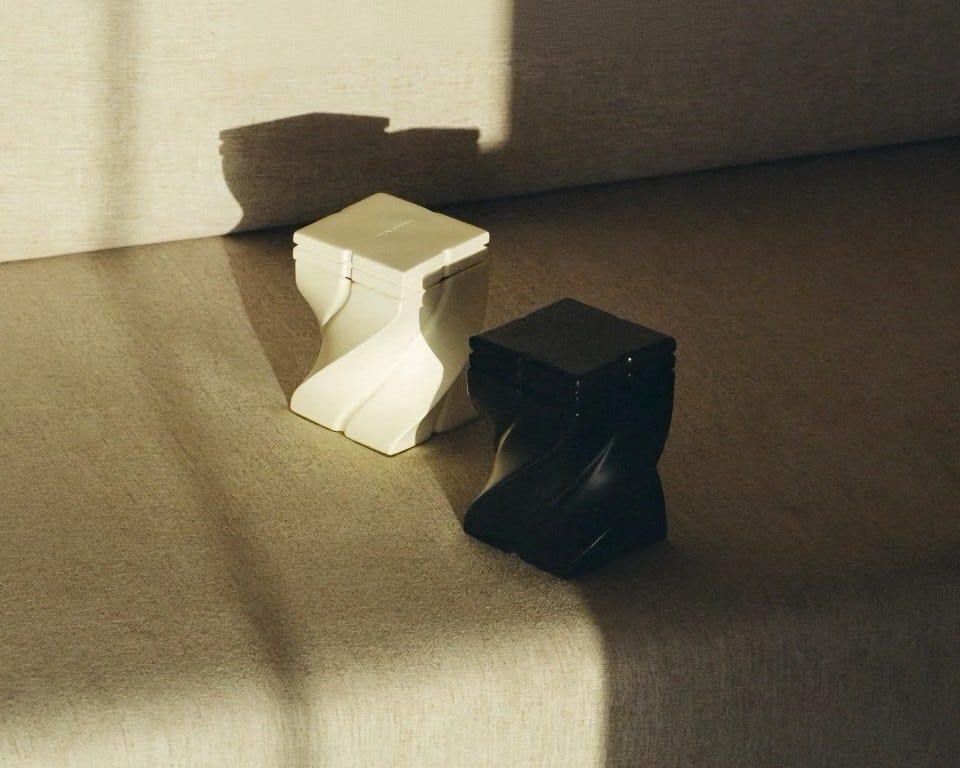
Before scent enters the room, form is already doing part of the work
Good fragrance objects justify their place
A lot of home fragrance products are easy to remove mentally from the room around them. Even when they smell pleasant, they still read as utility items: objects brought in to do a job and little more.
The more memorable ones work differently. They hold their place before use, during use, and after the fragrance has faded. They feel like part of the room’s visual and material logic rather than an interruption to it.
That is part of what makes the almost fever persuasive. Its language is built around a quieter premise—“less, but better”—with fragrance approached through craftsmanship and a vocabulary shaped by architecture, sculpture, and painting rather than by decorative excess.
What matters here is not simply the brand story. It is the design implication behind it. If fragrance is treated through form, structure, and basic materials, then it stops behaving like a quick atmospheric layer. It starts behaving like an object that belongs in daily life.
That difference changes the way people choose.
Instead of asking what scent will make a room feel more luxurious, you begin to ask what kind of object actually deserves to stay in that room.
That is usually the better question.
Presence is often a matter of rhythm, not permanence
One reason incense still feels relevant is that it introduces time very clearly into a space.
A candle can burn for hours and slowly disappear into the background. A diffuser can become almost invisible through repetition. Incense tends to do something more precise. It marks a span of time. You light it, the room shifts, and then the moment ends.
That beginning-middle-end structure gives it a kind of discipline.
It does not need to stay all day to have done enough. In fact, part of its appeal is that it does not try to. It shapes a room for a while, then leaves the room to itself again.
That is why incense can feel less like a home accessory and more like a gesture. It marks a transition: into evening, into quiet, into a different pace of attention.
A piece like Breath of Convergence Incense Sticks is useful to think with here because its product language stresses structure, systematicity, adaptability to different spaces, and forms derived from basic materials rather than ornamental excess. Read that way, it feels less like a scented impulse buy and more like a disciplined object for daily use.
That kind of restraint is often more convincing than intensity.
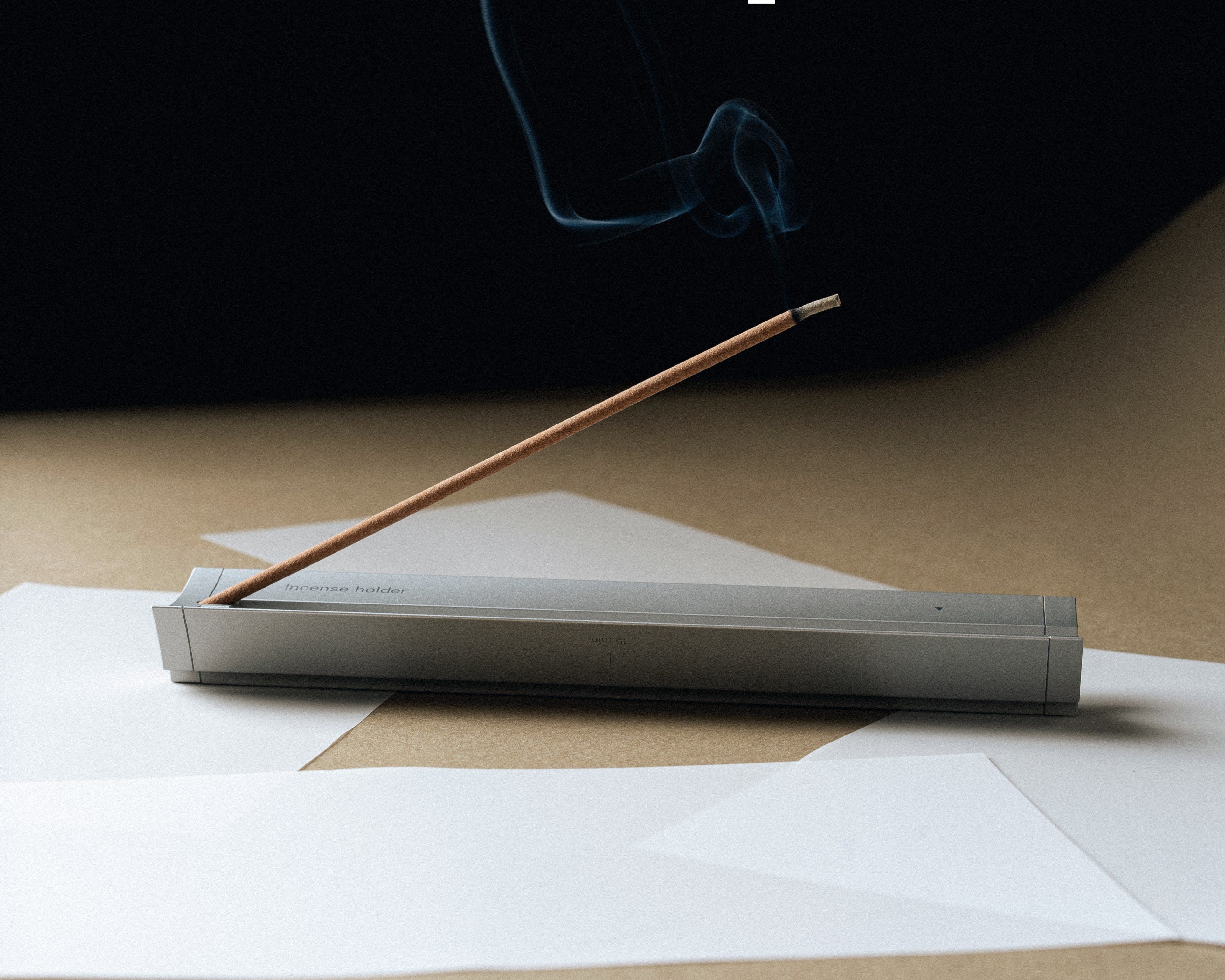
What changes a room is often not duration, but the clarity of a brief interval
Not every scent needs to fill a room
Another mistake people make with home fragrance is assuming that every product has to operate at room scale.
It does not.
Some of the best fragrance experiences happen in much smaller zones: near clothing, inside a wardrobe, beside a desk, or in the few feet around a bedside routine. These are not lesser uses of fragrance. In many cases, they are better ones because they are more exact.
Precision prevents overload.
When every object is trying to scent the entire home, the result is often flattening. The space takes on one continuous scented layer, and nothing stands out long enough to be remembered. The room does not gain atmosphere so much as a kind of fragrant coating.
A more thoughtful approach is to let different objects do different kinds of work.
One may belong to ritual. Another may belong to fabric. Another may only need to appear occasionally. Once you think this way, fragrance stops acting like a blanket solution and starts behaving more like part of the room’s internal rhythm.
Less does not mean less care.
Less often means more exactness.
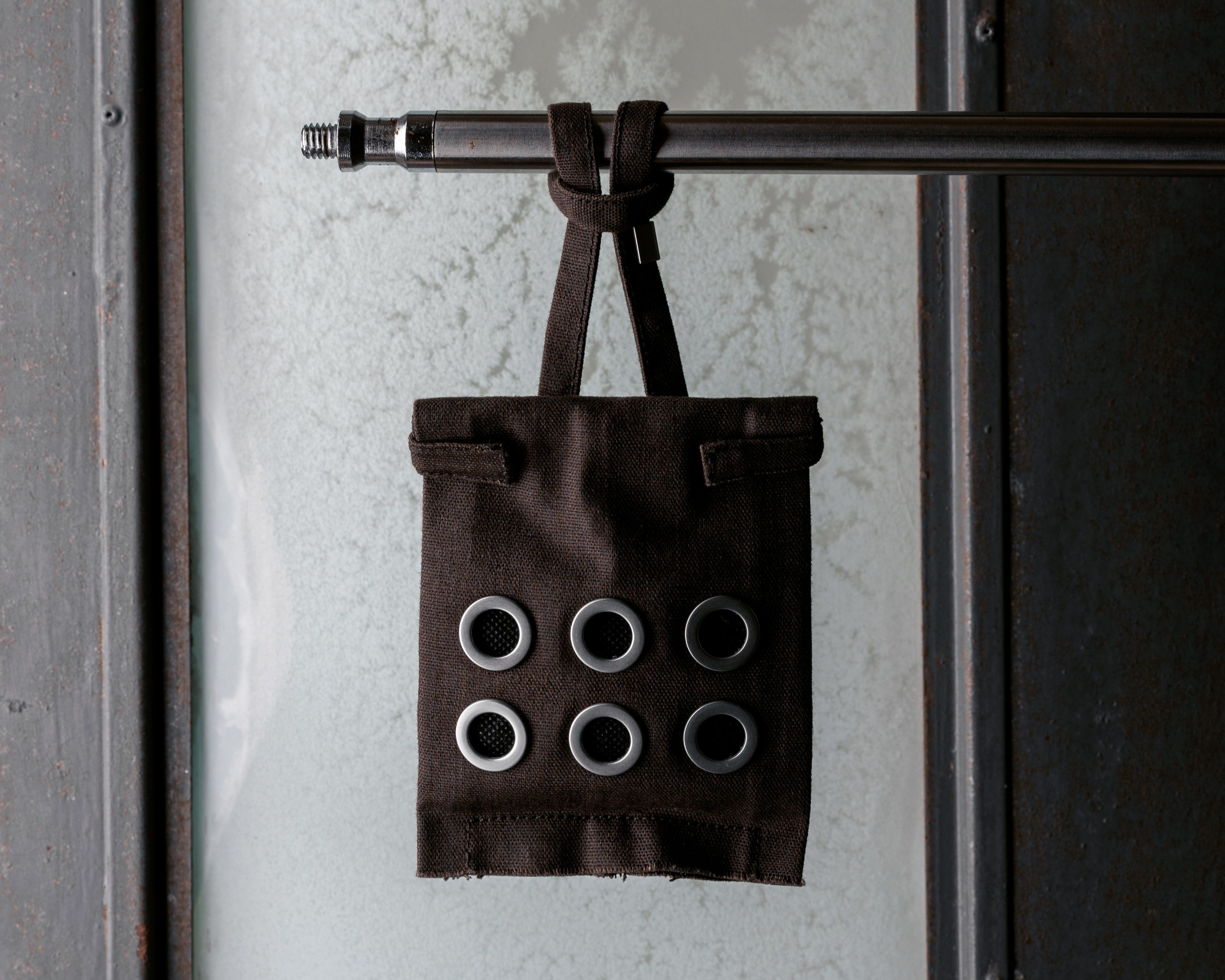
Some of the most lasting fragrance belongs not to the whole room, but to a smaller, more personal zone
Home fragrance should belong
There is a reason some fragrance objects feel slightly wrong the moment they are brought home. The scent may be pleasant, but the object itself seems unrelated to the space around it. It lands on a table, does its job, and never quite settles in.
The better ones do not have that problem. They do not ask the room to make space for them. They already make sense within it—visually, materially, and in scale. Even before they are used, they feel placed rather than added.
That is why material matters here. Not because it automatically makes an object feel elevated, but because it determines whether the object can still hold its place when no scent is actively diffusing. If it only works while performing, its presence is thin. If it still looks right in silence, it has a better chance of lasting.
This matters even more in smaller spaces, where visual noise builds quickly. A fragrance object does not need to behave like a focal point. More often, it works best when it behaves like a quiet support.
What people remember is rarely just the scent
In real life, fragrance is not experienced as a note list. It is experienced through use.
The object lit at the same hour each evening. The faint trace near clothing. The brief pause that changes the tone of a room. These small repetitions tend to leave a deeper impression than intensity ever does.
That is why atmosphere is not only about smell. It is also about pattern. A fragrance object becomes convincing when it enters daily life naturally and gives a space a more recognisable rhythm.
This is also why ritual does not need to be elaborate to matter. It can be brief and almost ordinary. What gives it weight is not performance, but return.
And that is the real difference between novelty and presence. Novelty is immediate; presence is what still feels right once the first impression has gone. The best home fragrance does not keep trying to surprise you. It simply continues to belong.
At that point, it is no longer just adding scent to a room. It is helping the room feel more like itself.