
What Makes a Jewelry Collection Feel Personal Over Time?
A jewelry collection does not become personal simply because it contains sentimental pieces. Nor does it become personal because it follows the correct rules about essentials, investment buys, or timeless classics. In practice, a collection begins to feel personal when it reflects a recognizable way of seeing: a preference for certain lines, proportions, materials, and kinds of restraint or boldness. Over time, those preferences begin to repeat themselves. Once they do, a collection starts to feel less like a set of purchases and more like a language.
This matters because so much fashion advice still treats jewelry as if it should be assembled through categories alone: one everyday chain, one statement earring, one signet ring, one pair of hoops, one watch, one sentimental piece, and so on. That guidance can be useful at the beginning, but it often produces a collection that is technically complete and emotionally flat. It may cover the expected functions without ever becoming expressive.
The collections that stay interesting are usually built differently. They grow through return. A person notices that they are consistently drawn to curved metal rather than sharp geometry, or to unusual silver rather than polished gold, or to stones with body and opacity rather than stones that simply sparkle. They find themselves wearing one ring shape again and again, preferring earrings that read as punctuation rather than ornament, or choosing pieces that feel quiet from a distance but intense up close. At that point, jewelry stops being a category of accessories and starts becoming part of personal form.
That, to me, is the real difference between a jewelry collection that merely exists and one that feels lived in. A personal collection is not only aesthetically coherent. It also contains evidence of repetition, preference, and use.
A personal collection is built through return, not accumulation
One of the easiest mistakes to make with jewelry is assuming that variety automatically creates range. In reality, too much variety too quickly can flatten a collection rather than deepen it. When every piece points in a different direction, nothing begins to gather meaning.
Personal style rarely becomes legible through maximum coverage. It becomes legible through recurrence. The same shapes come back. The same scale comes back. The same mood comes back. Even when the pieces differ, they often belong to the same visual family.
This is one reason the most convincing jewelry collections often look smaller than they really are. They may contain many objects, but those objects speak to one another. A person who is drawn to elongated curves will keep choosing them, whether in a cuff, a ring, or a pair of sculptural studs. Collections such as Control Points are interesting in this context not because they offer “must-haves,” but because they show how a visual vocabulary can recur across wave forms, looped structures, mesh-like surfaces, and softened geometry without becoming repetitive.
A personal collection, then, is not the opposite of experimentation. It is experimentation that has begun to reveal a pattern.
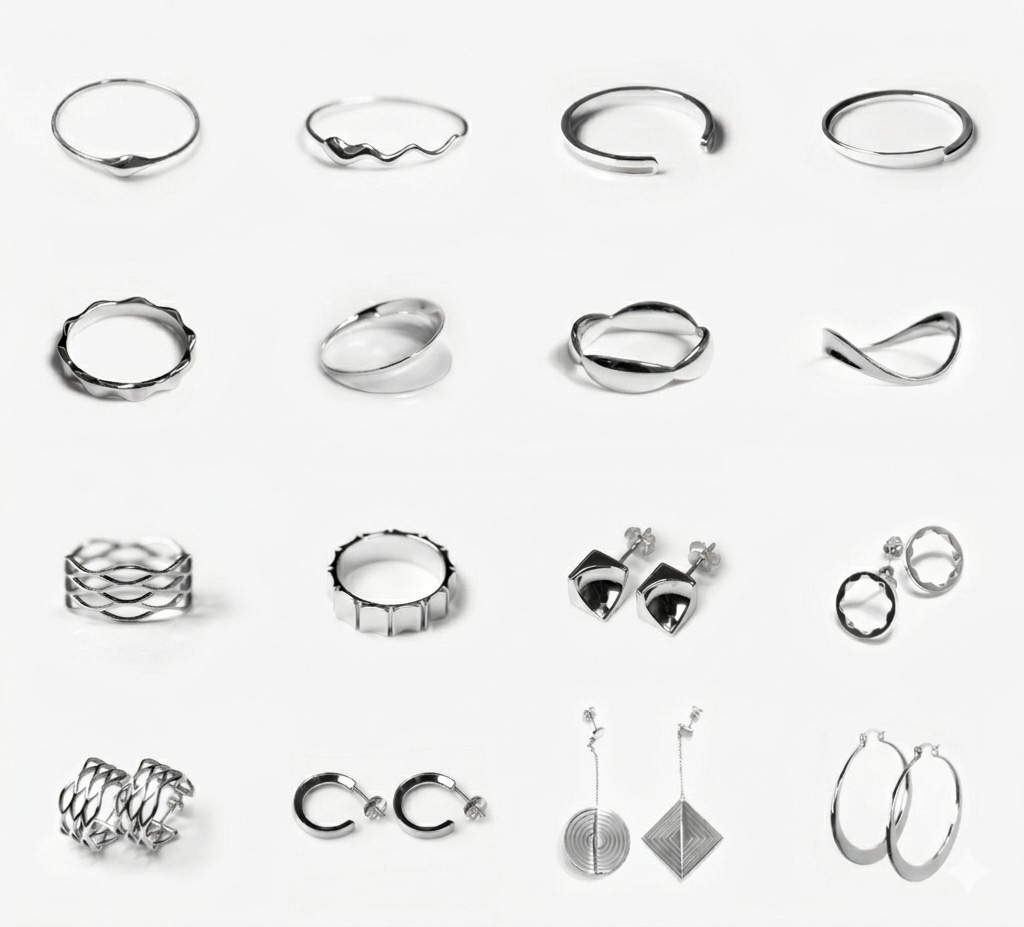
Shape is often more personal than symbolism
Many people assume that meaning is what makes jewelry personal. Sometimes that is true. But just as often, shape matters more than overt symbolism.
A symbolic piece can be emotionally significant, but if its form never quite feels right on the body, it may remain admired rather than worn. By contrast, a piece with no explicit narrative can become deeply personal simply because its shape feels intuitively correct. It aligns with the wearer’s sense of proportion, gesture, or visual rhythm.
This is why some people build collections around objects that do not announce meaning in a literal way. A ring may be chosen not because it represents anything specific, but because its curve feels right beside the hand. An ear cuff, for example, can become persuasive not because it insists on a story, but because it alters the line of the ear with a subtle, concentrated presence.
The personal life of jewelry often begins there: not in what the piece says, but in what it repeatedly makes possible.
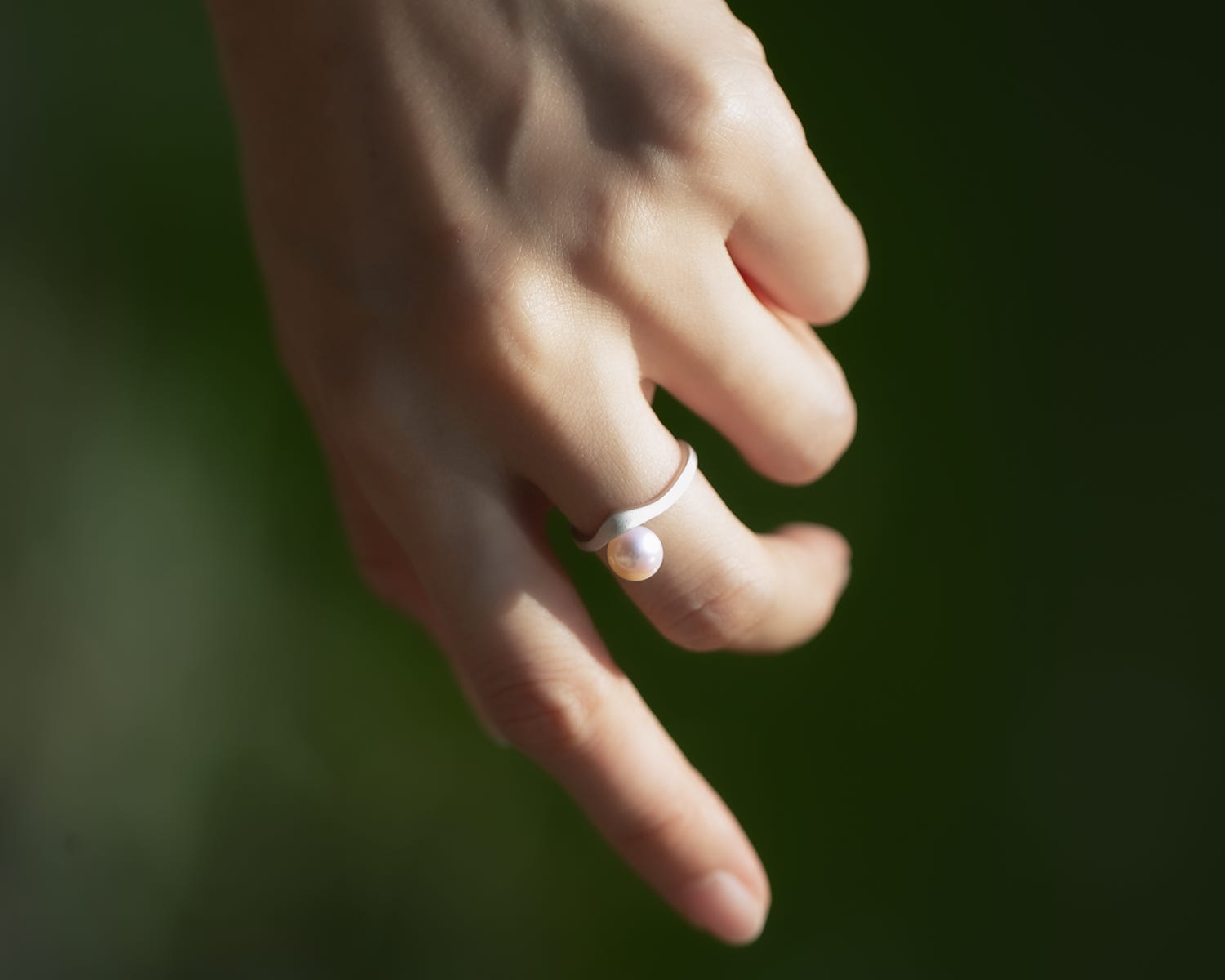
A pearl caught in fluid silver. It follows every gesture so intuitively that it feels inevitable with every movement of your hand.
The best collections develop a relationship to proportion
If clothing teaches us about silhouette, jewelry teaches us about scale. And scale is one of the least discussed but most decisive aspects of building a collection that feels genuinely one’s own.
A piece can be beautifully made and still feel wrong if its proportion does not belong to the wearer’s visual instincts. Some people come alive in a single concentrated object—a heavier ring, a strong cuff, a dense stud. Others need a longer line, more air, more suspension. Some people need jewelry to punctuate. Others need it to echo.
When a collection begins to feel personal, it usually means the wearer has started to understand these proportional needs. They know whether they prefer jewelry that sits close to the body or extends away from it. They know whether they want a ring to read as architecture, gesture, or shimmer. They know whether an earring should anchor the face or interrupt it.
This knowledge rarely arrives all at once. It comes from living with objects long enough to recognize not only what looks good in theory, but what consistently feels right in practice.
Repetition is not boring; it is how identity becomes visible
Fashion culture often trains people to fear repetition. If you wear the same kind of ring too often, you may worry that your collection lacks range. If you buy another silver piece with a softened curve, you may wonder whether you are being unadventurous. But repetition is not necessarily a failure of imagination. In jewelry, it is often how identity becomes visible.
The same preference repeated across time is what turns taste into authorship.
A collection that feels personal usually contains echoes. These echoes might be material—silver over gold, matte over shine, crystal over diamond. They might be structural—loops, curves, mesh, ovals, drops, stacked bands. Or they might be atmospheric—pieces that feel slightly industrial, slightly softened, slightly body-aware, slightly abstract.
What matters is not whether the collection demonstrates variety on paper. What matters is whether it reveals a way of editing the world.
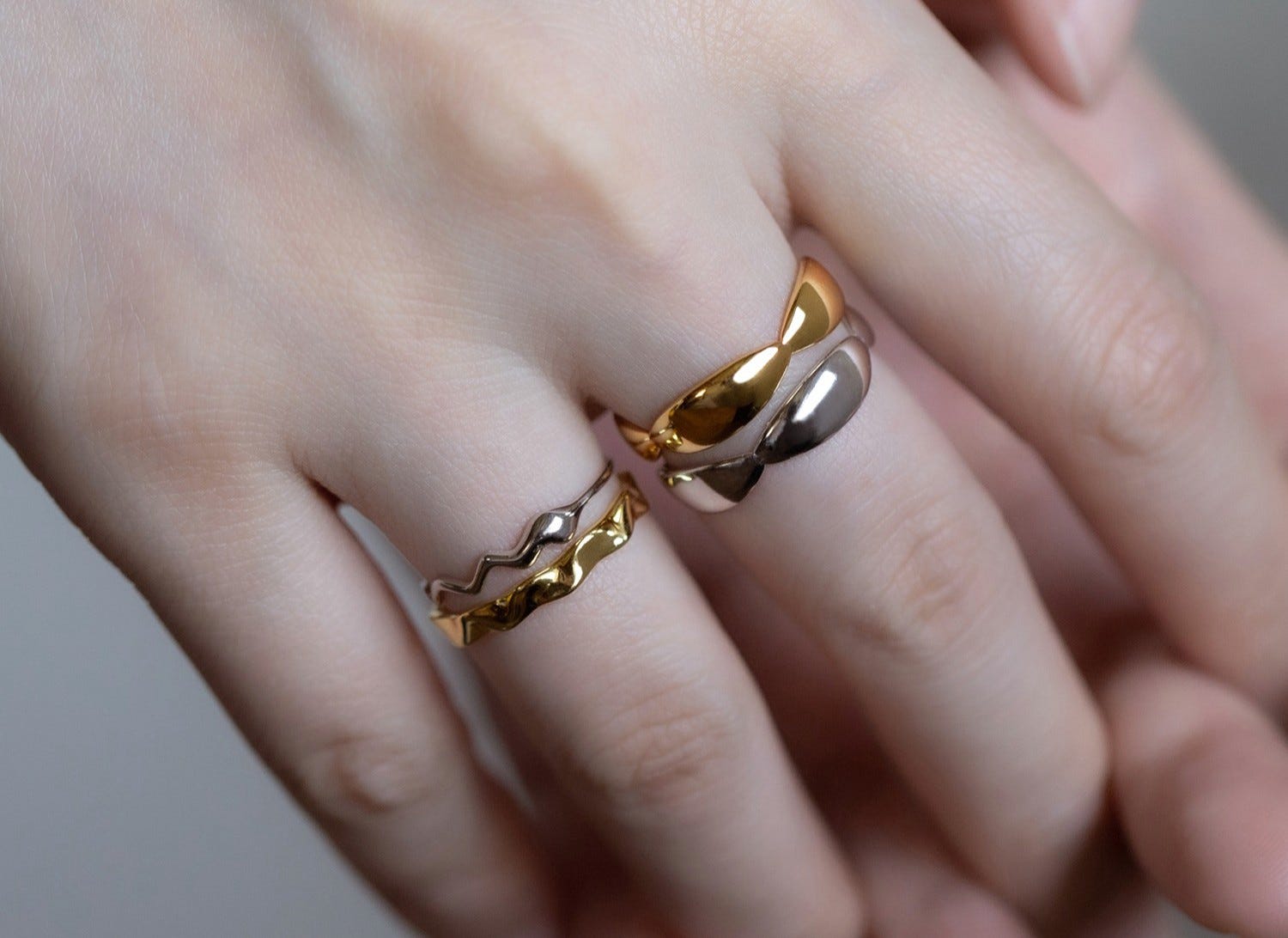
Stacked in quiet variation, these rings show how repetition can read less as habit than as signature.
Material memory matters more than novelty
Trends can introduce a person to jewelry, but material memory is what usually keeps them there.
By material memory, I mean the way certain substances begin to accumulate emotional and tactile familiarity over time. Sterling silver, for example, is not only a color choice. It is a way of relating to light, weight, temperature, and surface. Clear quartz is not only a stone. It can become associated with transparency, coolness, and a certain restrained presence. Printed glass may register differently again: less about obvious preciousness and more about holding image, surface, and atmosphere together.
This is why collections often deepen when a wearer learns which materials they are willing to return to repeatedly. Novelty has its place, but a personal collection usually grows through intimacy with material rather than constant replacement by category.
The best pieces are not always the most expensive or the most classic. Often, they are the ones whose material behavior remains persuasive after the initial excitement has faded.
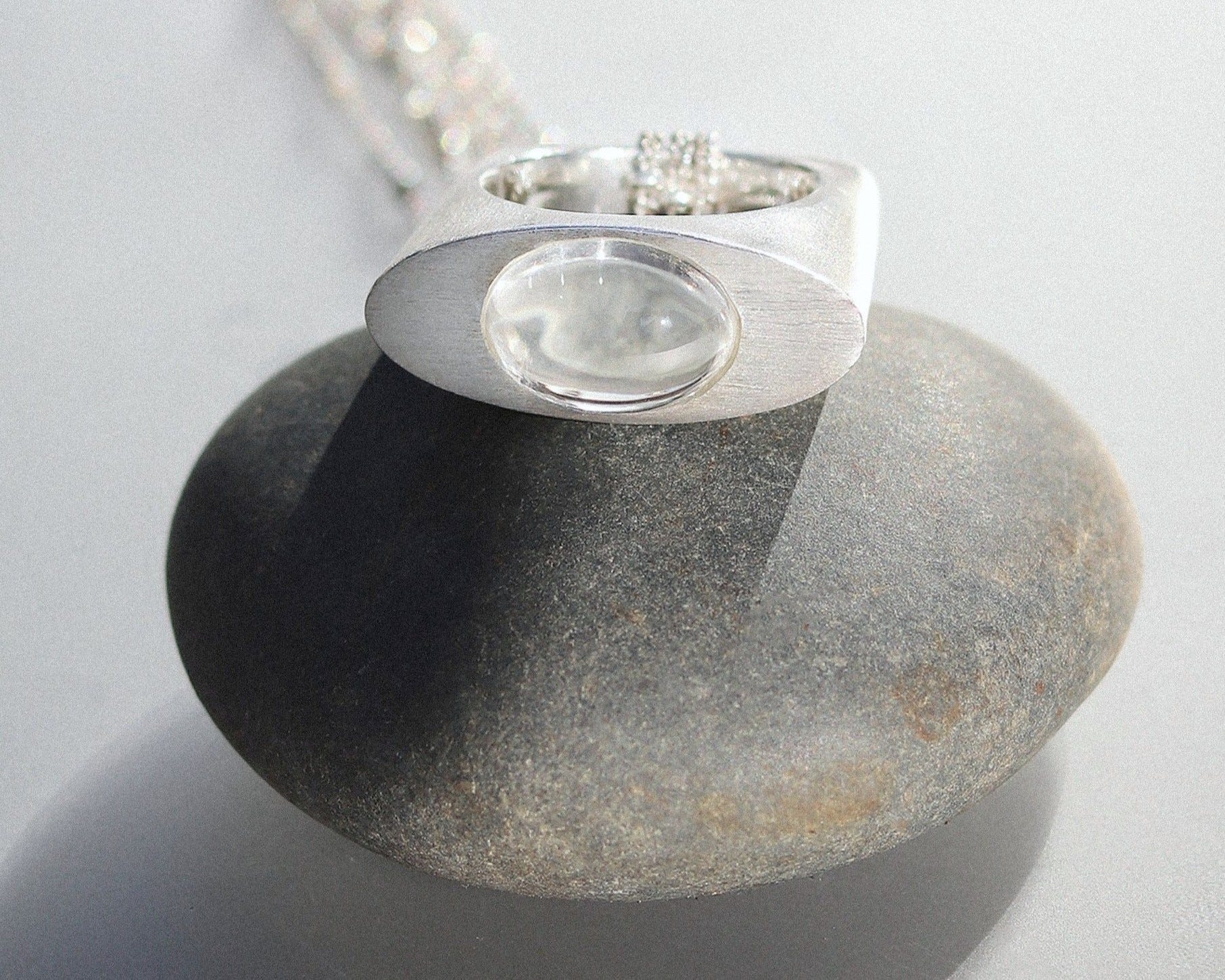
It doesn't rely on shimmer, but on a quiet, transparent tension that earns its permanent place in a collection over time.
A mature collection balances “easy” pieces with “defining” pieces
One of the biggest misconceptions about personal style is that every piece in a strong collection should be equally practical. That is not true. What matters is not that all jewelry performs the same function, but that the roles are understood.
Some pieces are there to disappear into daily life in the best way. They are worn without much thought, but they shape an outfit more than you realize. Others are defining pieces. They are not necessarily theatrical, but they alter the atmosphere of a look more decisively. They may ask for more intention. They may not be everyday in frequency, but they are everyday in identity—that is, they still feel like you.
A piece such as the Adjustable Oval Quartz Cuff Bracelet is useful to think about here. It is not a neutral filler object. It is the kind of piece that can function as an anchor—something worn more selectively, but remembered more strongly because it helps define the edges of a personal vocabulary.
A collection begins to feel more adult, more articulate, and more personal when this distinction becomes clear. You stop expecting every piece to do everything. Instead, you let certain objects become anchors and others become signatures.
Jewelry becomes personal when it survives context shifts
There is another test that matters: can the piece survive different versions of you?
A collection may feel right for one season of dressing but begin to lose coherence when your clothing changes, your work changes, your hair changes, or your sense of self changes. The pieces that endure are usually the ones that can move through those shifts without losing their authority.
That does not mean they must be neutral. In fact, many of the most personal pieces are quite distinct. But they retain usefulness because their distinction is grounded in form rather than novelty. They can accompany a white shirt, a knit dress, a tank top, an oversized coat, a crisp suit, or something deliberately undone. Their context changes, but their internal logic remains stable.
This is one reason shape matters so much. Shape often travels better than theme.
Quiet strength tends to last longer than visual insistence
Many collections become more interesting as they become less eager to prove themselves.
This is not an argument against statement jewelry. Some of the most memorable jewelry is emphatic. But the pieces that remain compelling over time often have a different quality: they do not plead for attention; they hold it. Their effect comes from clarity, weight, line, or tension rather than immediate obviousness.
I think this is where many contemporary collections succeed or fail. Some rely too heavily on recognizability—an overt motif, a familiar reference, a kind of instant legibility. Others trust proportion and surface more deeply. They understand that a piece can feel distinctive without becoming loud, and substantial without becoming heavy-handed.
A personal collection often crystallizes around this distinction. You realize whether you are someone who wants jewelry to announce itself immediately, or someone who prefers it to gather power more slowly.
What newer pieces can add to an already personal collection
There is a tendency to talk about personal jewelry as if it must always be old, inherited, vintage, or already storied. But that can become another cliché. A collection is not made personal only by age. New pieces can enter very convincingly—if they deepen an existing vocabulary rather than interrupting it for no reason.
This is where contemporary independent design can be especially useful. New pieces often help clarify preferences that older collections only hinted at. A person may realize, through a newer ring, that what they have always loved is not “silver jewelry” in general but silver with a certain fluidity. Or that what they thought was a preference for minimalism is actually a preference for softened geometry. Or that what attracts them to a stone is not color alone but the way the stone changes the density of a form.
A compact object like the Capsule Couple Ring is interesting for exactly this reason. It suggests that a personal collection does not only grow through larger gestures or louder pieces. Sometimes it grows through condensed forms—pieces that seem simple at first, but become more convincing the more often they are worn.
Newness becomes valuable, then, not because it refreshes a wardrobe automatically, but because it helps articulate what the wearer already half-knew.
The most personal collections are edited, not merely expanded
A truly personal collection does not only grow. It also sharpens.
Over time, some pieces stop making sense. Others remain beautiful but no longer belong to the visual language that has emerged. Some stay for memory. Others are passed on, stored, or simply worn less. This is not evidence that the collection has failed. It is evidence that the wearer’s eye has become more precise.
Editing is part of personal style. If accumulation gives you options, editing gives you shape.
That is why the best collections rarely feel random, even when they are eclectic. They have been refined by time, repetition, preference, and refusal. The wearer has learned not only what they love, but what they no longer need to buy.
So what makes a jewelry collection feel personal over time?
Not sentiment alone.
Not rarity alone.
Not trend awareness.
Not a checklist of essentials.
A jewelry collection begins to feel personal when it records repeated choices clearly enough that a point of view becomes visible.
It might reveal a love of curved metal, or body-aware proportions, or cool stones, or softened industrial textures, or small but concentrated forms. It may show that the wearer returns to rings before necklaces, or prefers earrings that alter silhouette rather than sparkle, or gravitates toward pieces that feel more like objects than embellishments.
Most of all, a personal collection feels personal because it has been lived with. The pieces have moved through different moods, outfits, and years. They have stopped being isolated buys and started becoming part of a system of recognition.
That system does not need to look universal to be successful. In fact, the more specific it becomes, the more persuasive it usually is.
And that, perhaps, is the most useful way to think about jewelry over time: not as a matter of owning the right pieces, but as a matter of noticing which forms, materials, and tensions you are willing to keep returning to until they become unmistakably yours.