
What Makes an Everyday Object Feel Worth Keeping?
Most objects are easy to admire once. Much fewer are easy to live with.
That difference matters more than people usually admit.
A lot of things look convincing in isolation. They photograph well, they carry a clear idea, they signal taste quickly. But daily life asks different questions. Does the object still feel right when you are using it absentmindedly? Does it still belong when it is half-empty, quickly rinsed, left on the table, picked up again the next morning? Does it become clearer with repetition, or thinner?
What makes an everyday object worth keeping is rarely the force of the first impression. More often, it is the object’s ability to remain convincing after the first impression has gone.
A cup has nowhere to hide
Cups are among the hardest everyday objects to design well because they are judged from too many angles at once. You feel them at the lip, in the fingers, in the wrist, and in the moment they return to the table. You notice their weight when they are full and when they are empty. You notice whether they still look settled when they are doing nothing.
That is why cups are such an unforgiving test for design. They expose the difference between form that only reads and form that can actually live.
A cup that feels overdrawn rarely lasts. So does a cup that is perfectly competent but visually dead. The objects people keep tend to occupy a narrower, harder space: clear without becoming generic, specific without becoming theatrical.
Normality is one kind of excellence
Jasper Morrison understood this long ago. His PlateBowlCup for Alessi remains useful not because it is a classic example of minimalism, but because it argues for something harder: normality without banality. Alessi describes Morrison’s pursuit of “normality” as giving the work an aura of “sophisticated simplicity,” while Morrison himself defines it more plainly as “a range of everyday tableware in ceramic.” Source Source
That language matters because it points to a standard many objects fail to meet. A daily object does not become lesser by refusing spectacle. In many cases, that refusal is exactly what allows it to stay in use.
The best ordinary things do not become invisible. They become dependable without becoming mute.
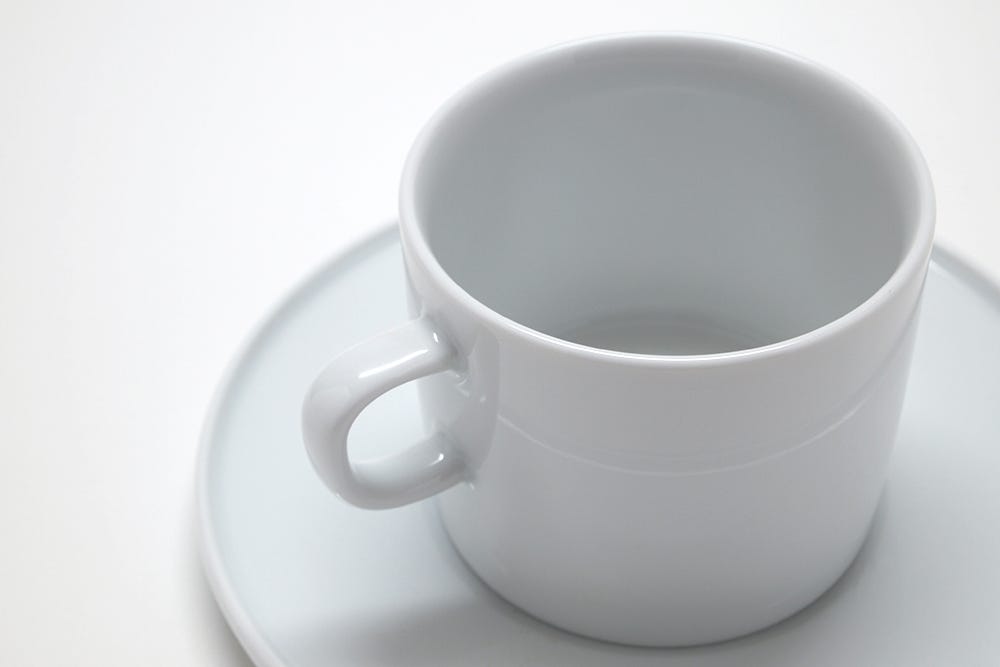
Designed by Jasper Morrison for Alessi. Image source: Webo-Kobe.com
Architectural form matters when it reaches the hand
The opposite mistake is to assume that stronger form automatically produces a stronger object. It does not. Architectural language can generate excellent tableware, but only when its movement survives contact with use.
That is what makes Zaha Hadid Design’s tableware relevant as a comparison. The collection extends a recognisably fluid language into trays, vessels, carafes, tumblers, and other tabletop objects. What matters is not the architectural reference on its own, but whether that fluidity still works at the scale of handling, pouring, holding, and resting. Source
Once form leaves the image and enters the table, it is judged differently. It is no longer enough for it to appear dynamic. It has to distribute weight properly. It has to meet the mouth cleanly. It has to sit among other objects without turning the whole setting into a performance.
A daily object does not need less form. It needs form that can withstand ordinary conditions.
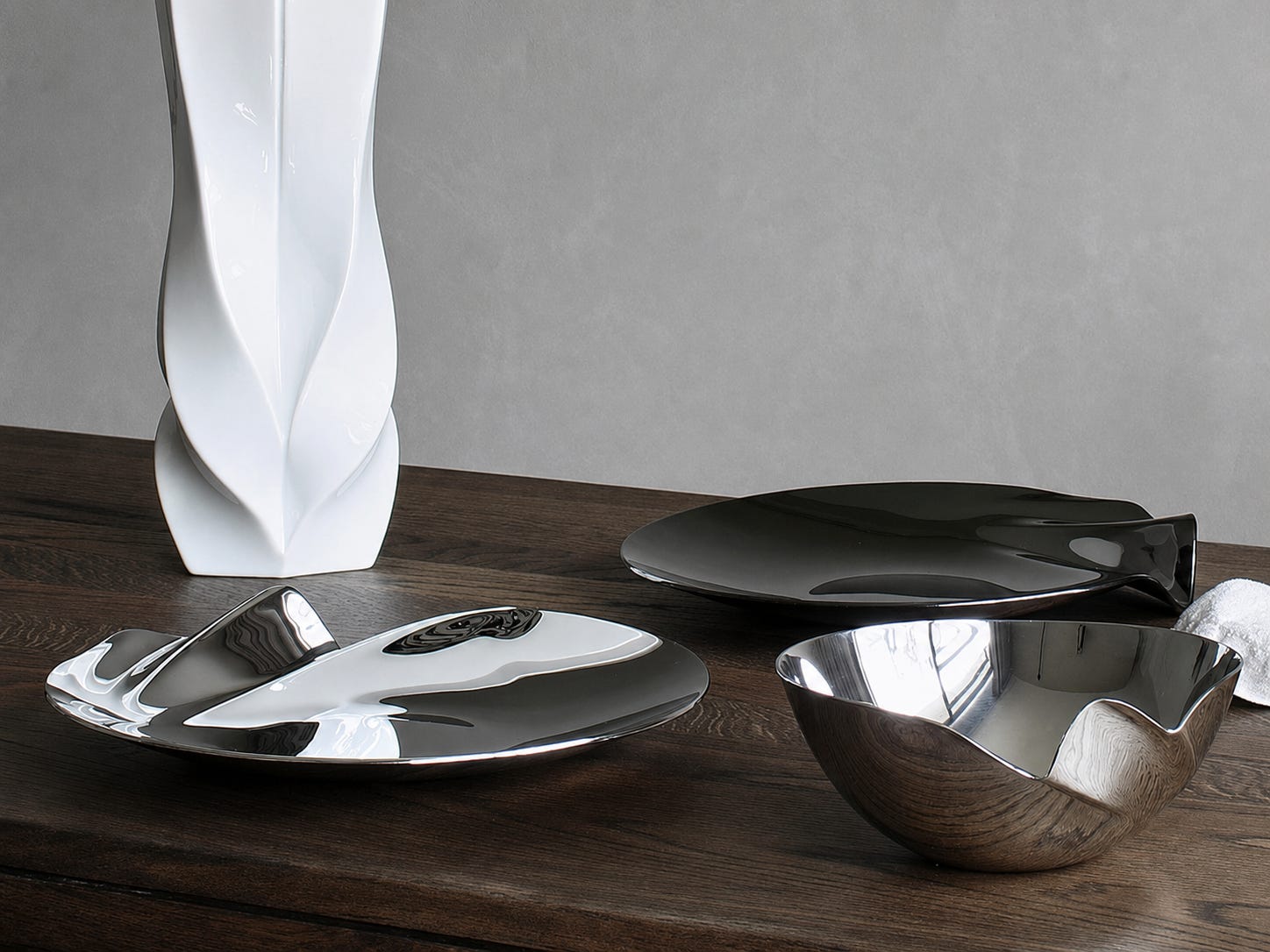
Designed by Zaha Hadid. Image Source: Designquarters.com
StudioRan starts from a harder problem
Becomes relevant in a more grounded way, StudioRan frames its ceramics through Nature × Parametric × Material and describes itself as working at the intersection of sensual clay and rational code. In the Curve collection, flowing architectural language is translated into objects for daily use rather than held at the level of image alone. Source
That is a harder problem than it sounds. Many objects can borrow the appearance of architecture. Much fewer can carry that language into a scale where the hand notices everything.
What matters here is not whether a piece looks “designed” from a distance, but whether shape, balance, and surface still make sense once the object is used repeatedly. That is where parametric thinking either becomes tactile or stays merely graphic.
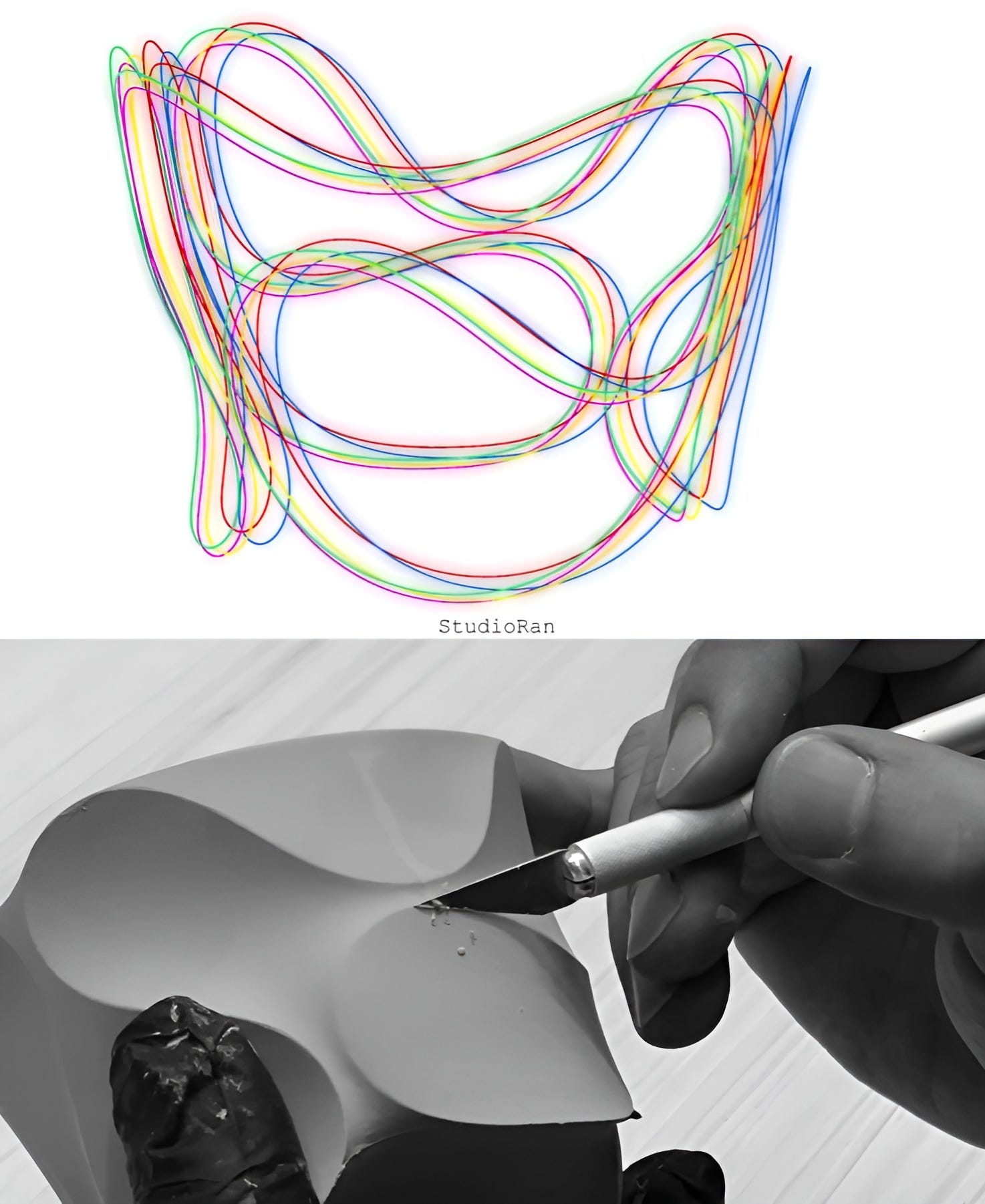
Handmade ceramics matter when they correct the drawing
This is also why hand-making matters here, but not for sentimental reasons.
The easy language around craft is often too vague to be useful: warmth, imperfection, soul. None of that explains why one cup stays in use and another does not.
What actually matters is that clay resists abstraction. It slows down the drawing. It exposes whether a profile can survive thickness, shrinkage, firing, repeated washing, and repeated handling. A form that seems elegant on screen can become awkward very quickly once it has to become ceramic.
That resistance is valuable. It means hand-making is not merely adding charm to a concept. It is a way of testing the concept against material fact.
Seen that way, the most interesting thing about a parametric ceramic object is not that it combines code and craft. It is that craft forces code to become more exact. The clay asks the geometry to become quieter, denser, and more disciplined. If the design survives that pressure, the result can feel contemporary without becoming cold.
An object earns its place after use
One of the simplest ways to judge whether an everyday object deserves to stay is to look at it when nothing is happening.
Not while it is being admired.
Not while it is being explained.
After use.
When the coffee is gone, when the table is slightly messy, when the cup is standing among other things without ideal lighting or special framing—does it still hold itself together? Does it still contribute to the scene, or does it suddenly become only a container waiting to be removed?
Many design-led domestic objects lose force here. Their role ends when the action ends. The better ones do not become decorative leftovers. They remain part of the table.
That is what the Curve coffee cups approach well. They are not trying to become collectible sculpture. They are trying to remain formally intact under ordinary conditions. That is a more modest ambition, but often a more durable one.
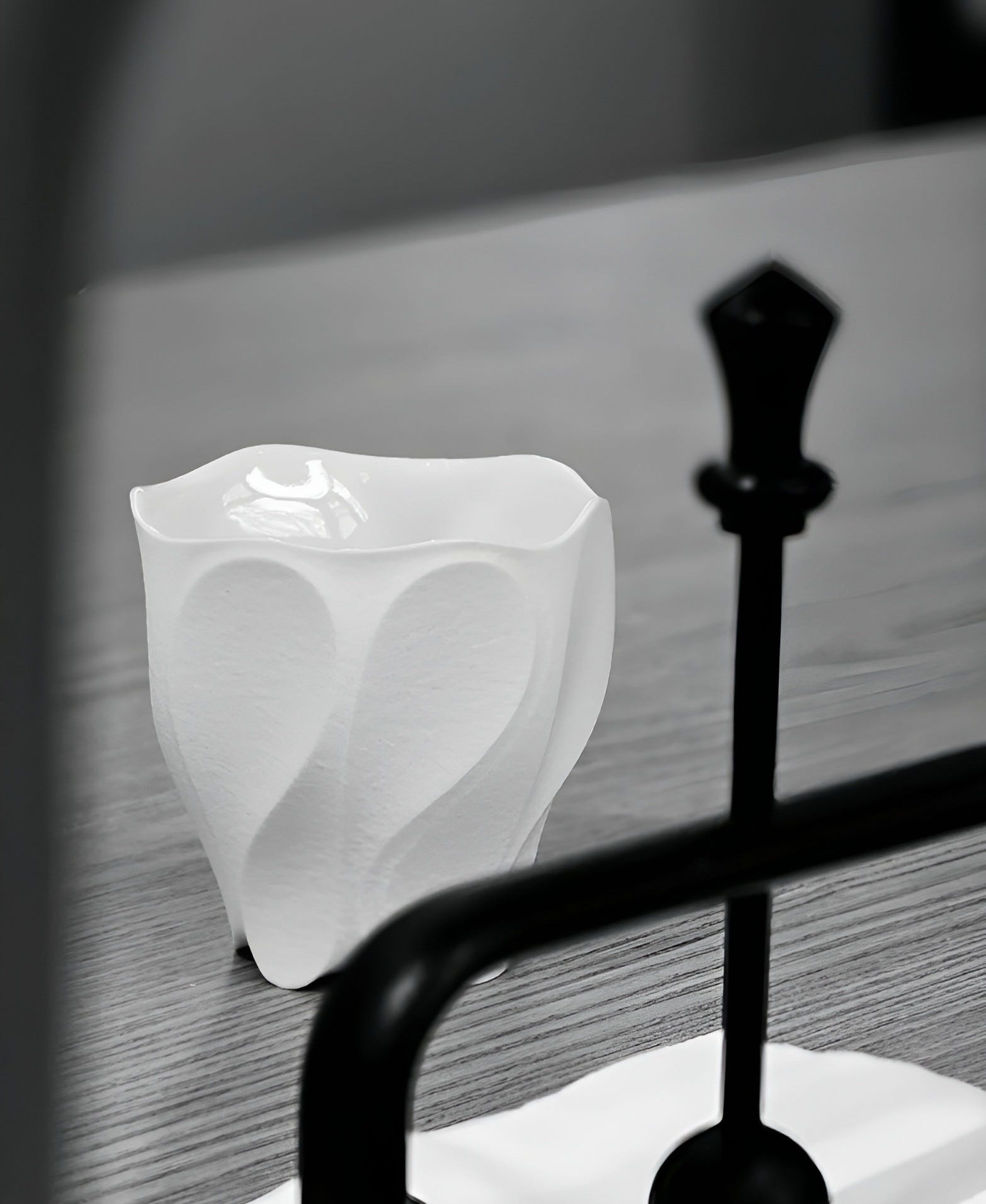
Worth keeping is a strict standard
People often talk as if the objects they keep are the ones that say the most about them. Sometimes that is true. More often, the things that survive are the ones that ask the least while giving the most back. They fit without disappearing. They carry form without becoming overbearing. They improve use without insisting on their own intelligence.
That is a demanding standard.
It means an object cannot rely only on concept, only on image, or only on making. It has to pass through all of them and still emerge as something you reach for without self-consciousness.
A daily cup is a very small object. But that is exactly why it is such a hard one. There is nowhere for weak decisions to hide.
The objects worth keeping are not the ones that remain impressive from a distance. They are the ones that continue to feel right at close range.